
Construction Cost Estimating
A cost plan with an understandable basis.
Build a project cost breakdown from the available design information. Document pricing sources, scope exclusions, allowances and date assumptions so changes can be evaluated consistently.
A construction estimate supports a decision only when its basis can be reviewed. Drawing revision, trade coverage, quantities, pricing date and exclusions should make clear what the total represents and where uncertainty remains.
Market rates, procurement conditions and contractor methods can change actual construction costs.
Discuss Your Project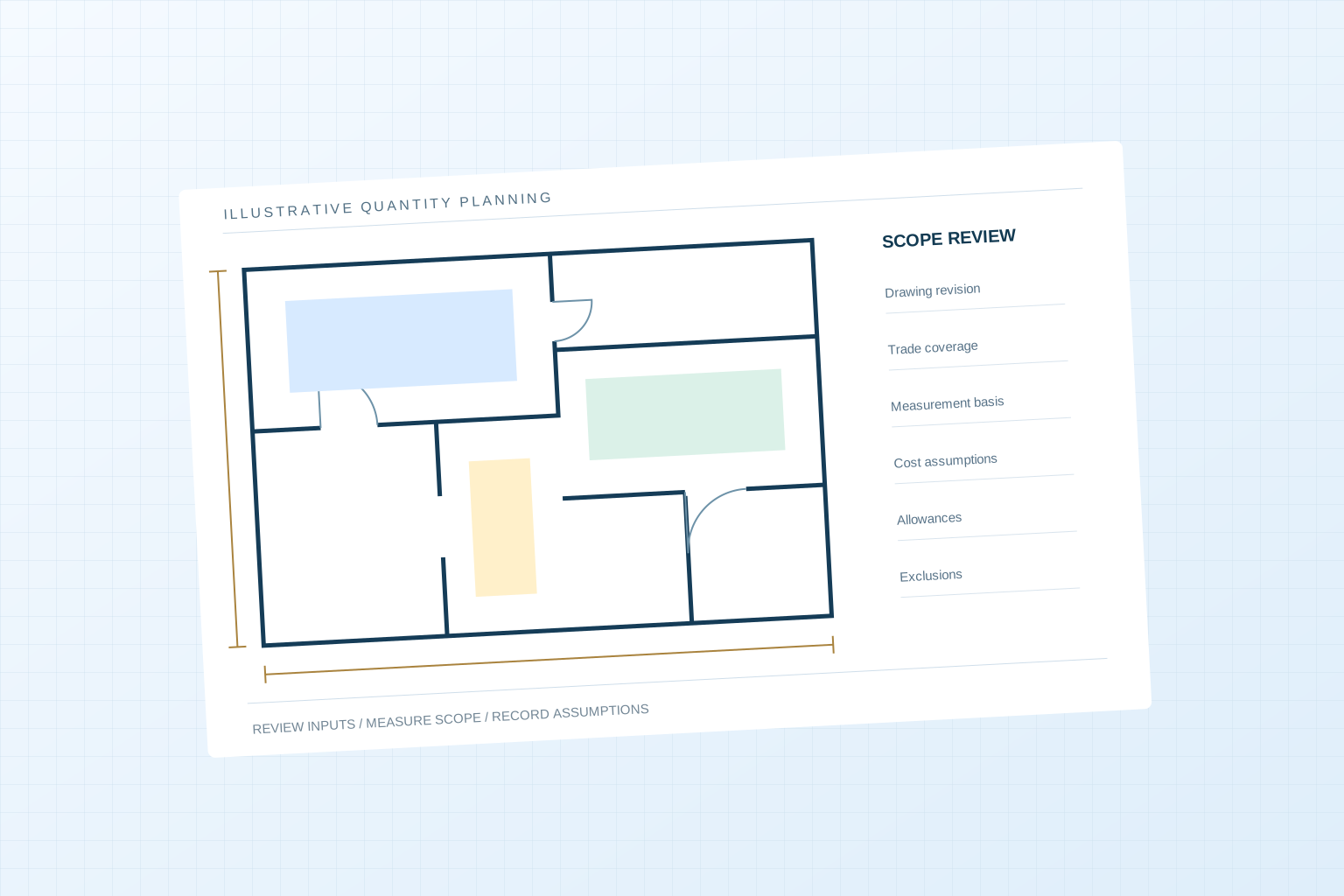
Explain the total through its scope and assumptions.
A trade structure helps users examine major cost components and compare alternatives on a consistent basis. Allowances should remain distinguishable from measured or quoted scope so later changes can be explained.
The scope can bring together trade-level cost summary, labor and material breakdown, assumptions and exclusions, budget variance review. Each output is agreed against the source information, intended use and review responsibilities before production begins.
Construction Cost Estimating Scope
- Trade-level cost summary
- Labor and material breakdown
- Assumptions and exclusions
- Budget variance review
- Dated estimate basis
- Trade and allowance comparisons
Project Contexts
- Project budget estimates
- Trade-level cost breakdowns
- Design-option cost comparisons
Build a cost plan that can be compared and updated.
Project location, specification and procurement conditions can affect pricing. The estimate should record its source assumptions and intended use rather than imply a guaranteed contractor price or a fixed final construction cost.
A useful starting package includes drawing set, specifications, site location and target construction period. The review establishes which records can be relied upon, which need clarification and how the deliverables will be checked before issue.
- Dated estimate basis
- Trade and allowance comparisons
- Project-specific deliverables and review milestones

What your project scope can include.
- 01
Agree the Estimate Basis
Confirm purpose, location, revision and included trades.
- 02
Develop the Quantities
Measure the scoped work and record incomplete information.
- 03
Apply the Pricing Basis
Organize costs, allowances and exclusions consistently.
- 04
Review the Breakdown
Explain the total, assumptions and items needing confirmation.
Questions before we begin.
Can two estimates be compared directly?
Only after checking that their scope, drawings, allowances and pricing assumptions are comparable. Similar totals can still represent different work.
How are uncertain items shown?
Allowances, exclusions or clarification notes should identify incomplete information. The agreed estimate format determines how these items are separated.
Can an estimate be updated after a design revision?
Yes, an update can be scoped against a clear drawing revision and change record. New information may affect both quantities and pricing assumptions.
What should I send for a project-specific proposal?
Drawing set, specifications, site location and target construction period. Market rates, procurement conditions and contractor methods can change actual construction costs. Scope, review rounds and delivery dates are confirmed after the source information is assessed.
Explore design directions.

Residential context
Illustrative architectural and documentation coordination.
Building coordination
Connecting project requirements and technical inputs.
Illustrative concepts — not completed client projects.
Let’s define your construction cost estimating scope.
Share your location, available documents and project goals.